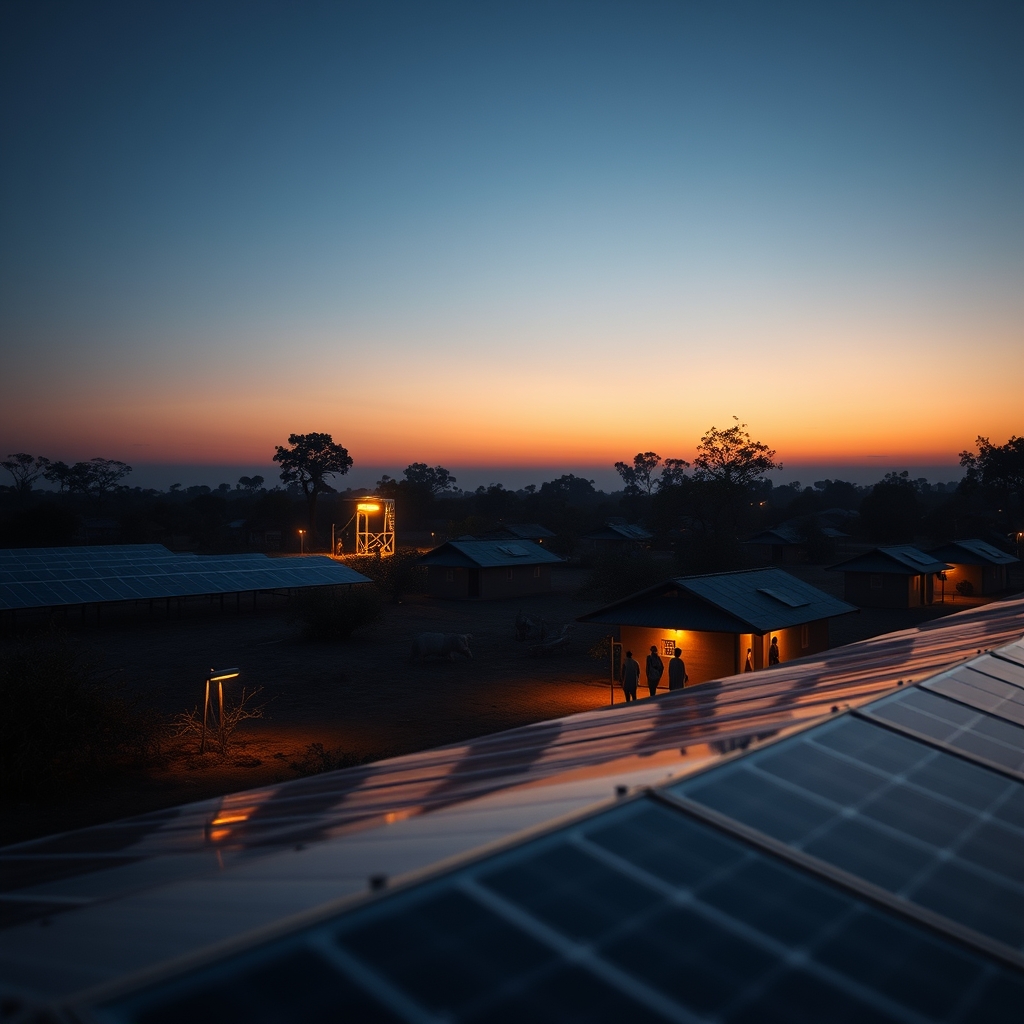
In the past year, more than 12 million people across Sub‑Saharan Africa have been connected to electricity for the first time, thanks to a new generation of AI‑powered microgrids that balance solar generation, battery storage, and local demand in real time.
"The technology is a game‑changer," says Dr. Amina Ndlovu, chief engineer at GreenPulse Solutions, the Nairobi‑based firm behind the rollout. "Our AI platform predicts weather patterns and consumption spikes with 92% accuracy, ensuring that even during cloudy weeks, villages maintain a stable power supply."
According to the International Renewable Energy Agency (IRENA), the continent’s renewable capacity grew by 18% in 2025, the fastest rate since 2010. Investment in off‑grid solutions reached $4.3 billion last year, with private capital now outpacing public funding for the first time.
Local entrepreneurs are already feeling the impact. In Uganda’s Kigezi district, a women‑run dairy cooperative reports a 27% increase in output after installing a GreenPulse microgrid, which powers pasteurisation equipment and refrigeration for milk transport.
Critics caution that scaling the model will require robust policy frameworks. "We need clear tariffs and grid‑integration standards," warns Luis Martínez, policy analyst at the World Bank’s Africa Energy Unit. "Otherwise, the benefits could remain unevenly distributed."
Nevertheless, the momentum is undeniable. Nations from Kenya to Senegal have set targets to power 80% of rural households with renewable microgrids by 2030, a goal that could lift an additional 45 million people out of energy poverty, according to the United Nations Development Programme.
As AI continues to refine energy forecasting, experts predict that the cost per kilowatt‑hour could drop below $0.07 by 2028, making clean power not just a development tool but a competitive advantage for Africa’s emerging economies.