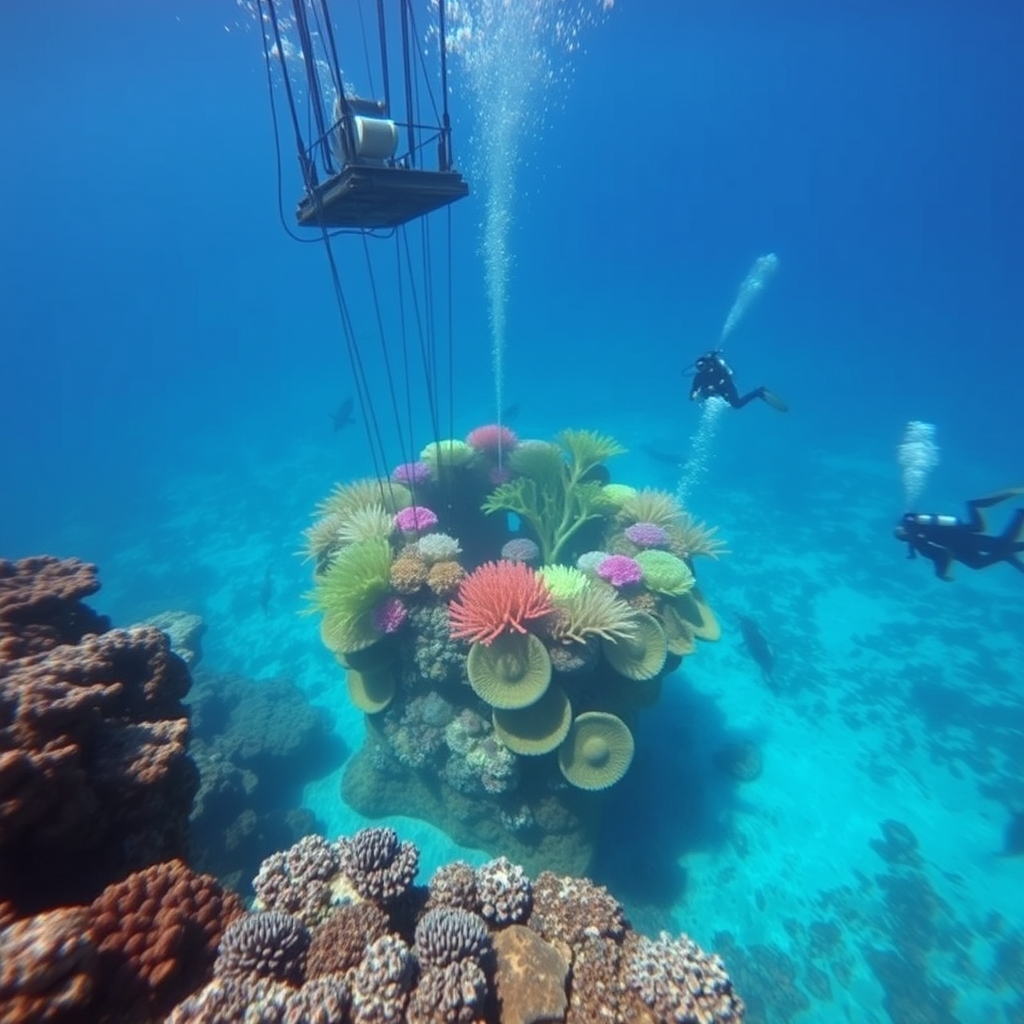
A joint initiative launched this week by Indonesia, Malaysia and the Philippines is using artificial intelligence and 3‑D printing to rebuild coral reefs devastated by warming oceans and bleaching events. The project, dubbed "ReefForge," aims to restore up to 1,000 kilometres of reef by 2030, making it the largest coordinated marine‑restoration effort in history.
At the heart of ReefForge is a network of autonomous underwater printers that translate satellite‑derived reef‑health data into custom‑designed limestone structures. AI algorithms analyze temperature trends, water chemistry and biodiversity metrics to determine the optimal geometry for each reef segment, then guide the printers to lay down bio‑compatible scaffolding that encourages native coral larvae to colonise.
"The technology allows us to match the physical form of a reef to the exact environmental conditions of each site," said Dr. Arif Wahyu, lead marine biologist at Indonesia's Sea Conservation Institute. "In pilot tests last year we printed 200 structures with an 85 % survival rate after six months – a figure that eclipses traditional restoration methods by a factor of three."
Regional governments are backing the venture with unprecedented funding. Malaysia's Minister of Maritime Affairs, Nurul Hadi, told reporters, "We are committing $150 million over the next five years, because healthy reefs protect our fisheries, tourism and coastal communities. This is an investment in the future of our oceans and our economies."
The United Nations Environment Programme has hailed the project as a potential blueprint for other coastal nations. "Coral cover has declined by roughly 30 % globally since 2015, and without rapid intervention we risk losing the ecosystem services worth an estimated $30 billion annually," said UNEP spokesperson Maya Patel. "AI‑guided restoration offers a scalable, data‑driven pathway to reverse that trend."
While the initiative promises transformative impact, experts caution that technology alone cannot solve the underlying drivers of reef loss. "We must pair reef printing with aggressive carbon‑reduction policies and sustainable fishing practices," warned Dr. Carlos Mendes, a marine ecologist at the University of Lisbon. "If we succeed, Southeast Asia will not only revive its own reefs but also set a global standard for climate‑adapted marine stewardship."