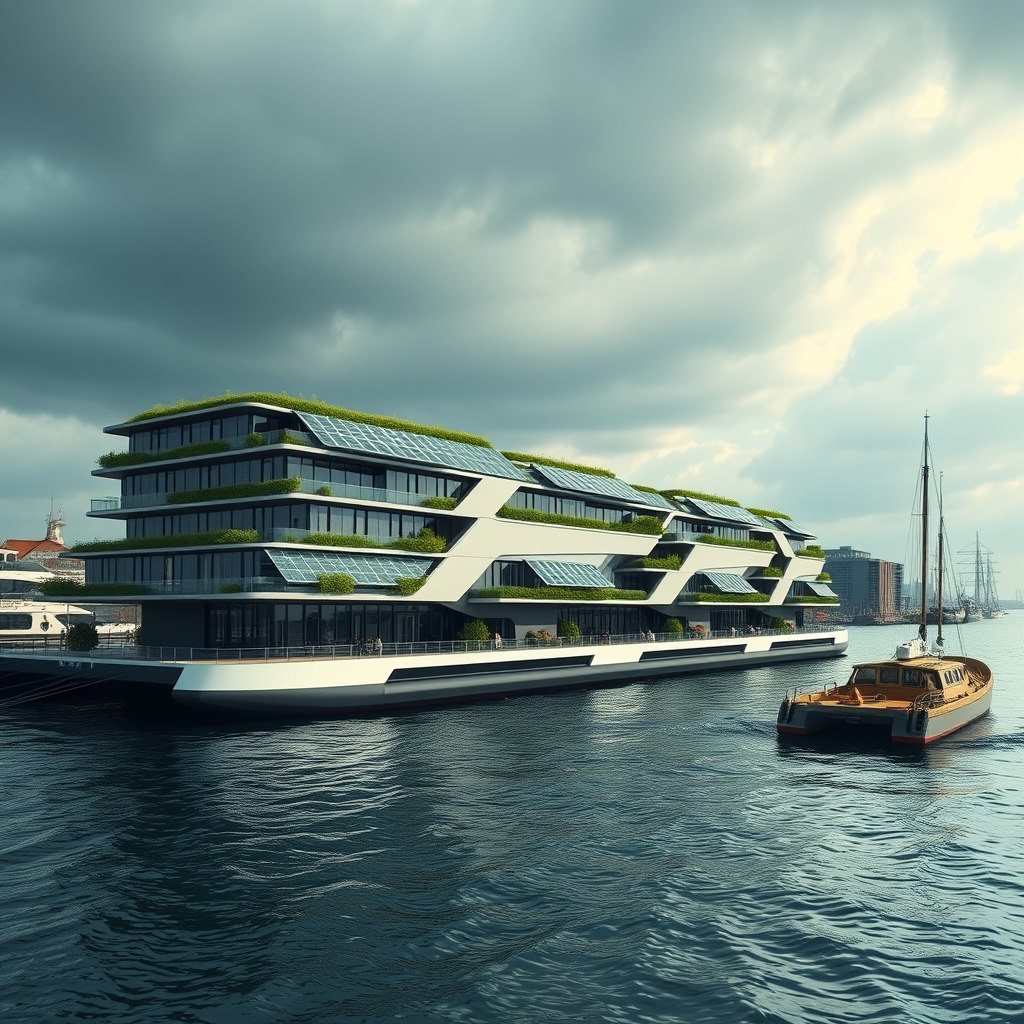
A sleek, modular platform christened "AquaCity" glided out of the Nieuwe Waterweg on Tuesday, marking the world’s first fully autonomous floating city prototype. The 8‑hectare structure, anchored just 2 km off the Dutch coast near Rotterdam, is the centerpiece of a joint EU‑Netherlands initiative to test next‑generation, climate‑resilient urban habitats.
Built at a cost of €1.1 billion (approximately $1.2 billion), AquaCity integrates a hybrid energy system that generates 60% of its power from renewable sources: 2.5 MW of photovoltaic panels, two 1.8 MW vertical wind turbines, and a closed‑loop marine‑heat exchange that supplies heating and cooling. Inside, 12‑story vertical farms produce up to 1,200 tons of leafy greens annually, while an AI‑driven waste‑sorting hub recycles 95% of all solid waste on board.
"This is not a science‑fiction experiment; it is a concrete response to rising sea levels and housing shortages," said Liesbeth van Dijk, the Dutch Minister of Infrastructure and Water Management, during the launch ceremony. "AquaCity demonstrates that we can create livable, carbon‑neutral communities on the water, without compromising economic viability."
Climate researcher Dr. Amara Kone of the International Institute for Sea‑Level Studies highlighted the project's broader implications: "If we can scale these floating habitats, we could offset up to 1.4 million tons of CO₂ emissions per year by 2035, while providing safe refuge for coastal populations vulnerable to flooding."
Project lead engineer Marco Alvarez described the living experience aboard: "Residents will enjoy a high‑speed internet backbone, autonomous mobility pods, and communal spaces that blend Dutch design with marine architecture. Our pilot aims to house 10,000 people within five years, with all essential services managed by adaptive AI algorithms."
Critics caution that the venture faces regulatory and financial hurdles. A recent report by the European Urban Futures Forum noted that up to 30% of the projected operating costs could exceed initial estimates, underscoring the need for robust public‑private partnerships.
Nonetheless, the launch has ignited interest from cities worldwide. Japan’s coastal prefecture of Kanagawa has already signed a memorandum of understanding to explore a similar floating district, and the United Arab Emirates is evaluating a desert‑to‑sea hybrid model for the 2030 World Expo.
With sea levels projected to rise another 12 cm by 2040, AquaCity could become a template for resilient urban expansion, marrying cutting‑edge technology with sustainable design to redefine how humanity lives on the water.