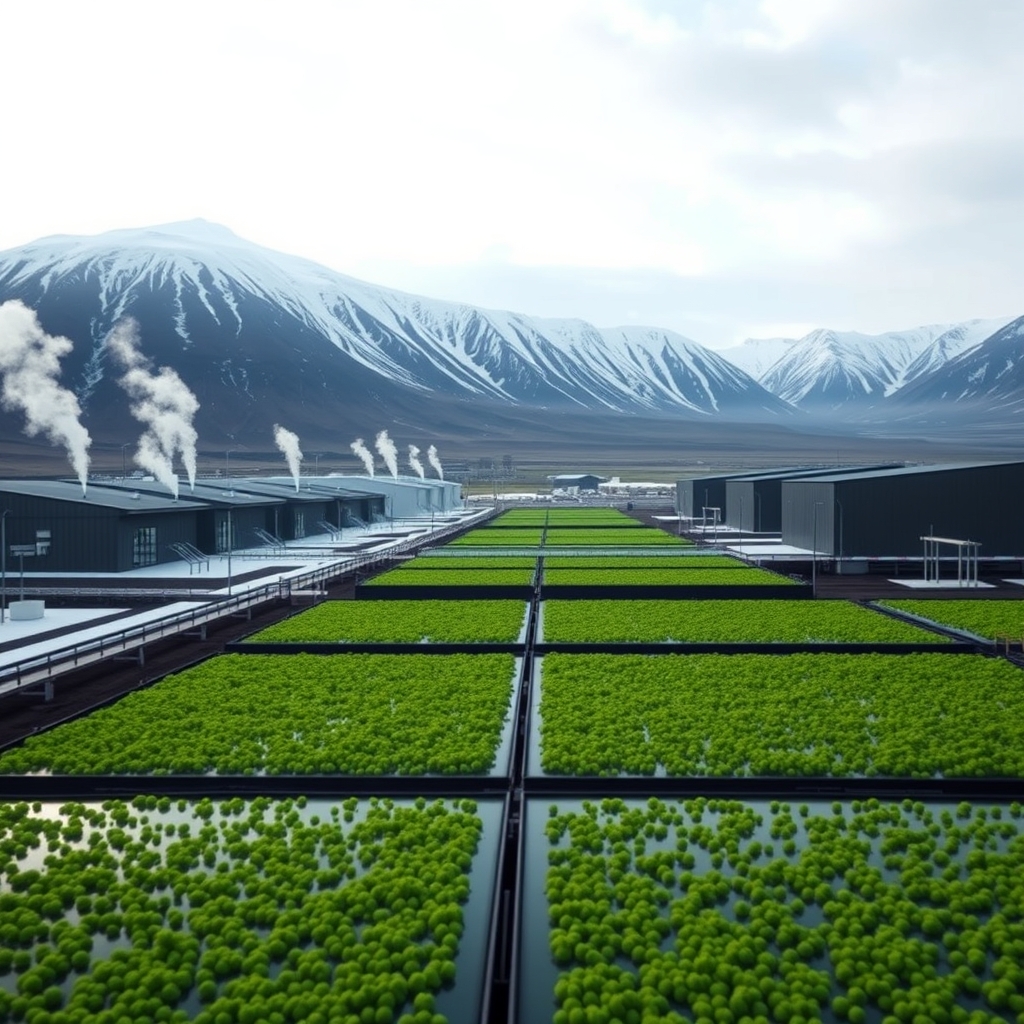
On a crisp June morning, Iceland unveiled Viðurborg, a 2‑square‑kilometer enclave on the Reykjanes Peninsula that aims to become the planet's first carbon‑negative city. Backed by a coalition of the Icelandic government, European research institutes, and private investors, the project is billed as a living laboratory for climate‑positive urban design.
At its core is a 150‑megawatt geothermal plant that taps into the volcanic heat beneath the peninsula, providing 100 % of the city's electricity and heating needs. According to the Ministry of Environment, the plant will generate enough low‑carbon energy to power roughly 25,000 homes, cutting Iceland’s national emissions by an estimated 0.8 million tonnes per year.
The city’s most innovative feature is its series of algae biofactories. Twelve modular facilities, each the size of a shipping container, will cultivate micro‑algae that absorb up to 2,000 tonnes of CO₂ annually. "Algae is the most efficient carbon sink we have on Earth," says Dr. Sigríður Ólafsdóttir of the University of Iceland's Sustainable Technologies Center. "When combined with geothermal heat, the growth cycles accelerate, turning waste CO₂ into high‑value proteins and biofuels."
Local employment is also set to rise. The construction phase has already created 3,500 jobs, and the permanent operations will sustain around 1,200 positions in energy, biotech, and services. Resident Anna Kristjánsdóttir, who moved from Reykjavik to join the project, notes, "It's not just a job; it's being part of a solution that could be replicated worldwide."
Critics, however, warn of potential ecological impacts. Conservation groups have raised concerns about the large‑scale algae ponds affecting marine ecosystems if wastewater leaks. The government responded by commissioning an independent environmental impact assessment, which predicts a 97 % mitigation success rate through advanced filtration and closed‑loop systems.
If Viðurborg meets its 2030 carbon‑negative target, it could set a template for future climate‑resilient cities, especially in regions with abundant geothermal resources. The International Energy Agency has already listed the settlement as a case study for scaling low‑carbon urban infrastructure. As the world watches, Iceland hopes its bold experiment will prove that net‑negative urban living is not a distant dream, but an achievable reality.