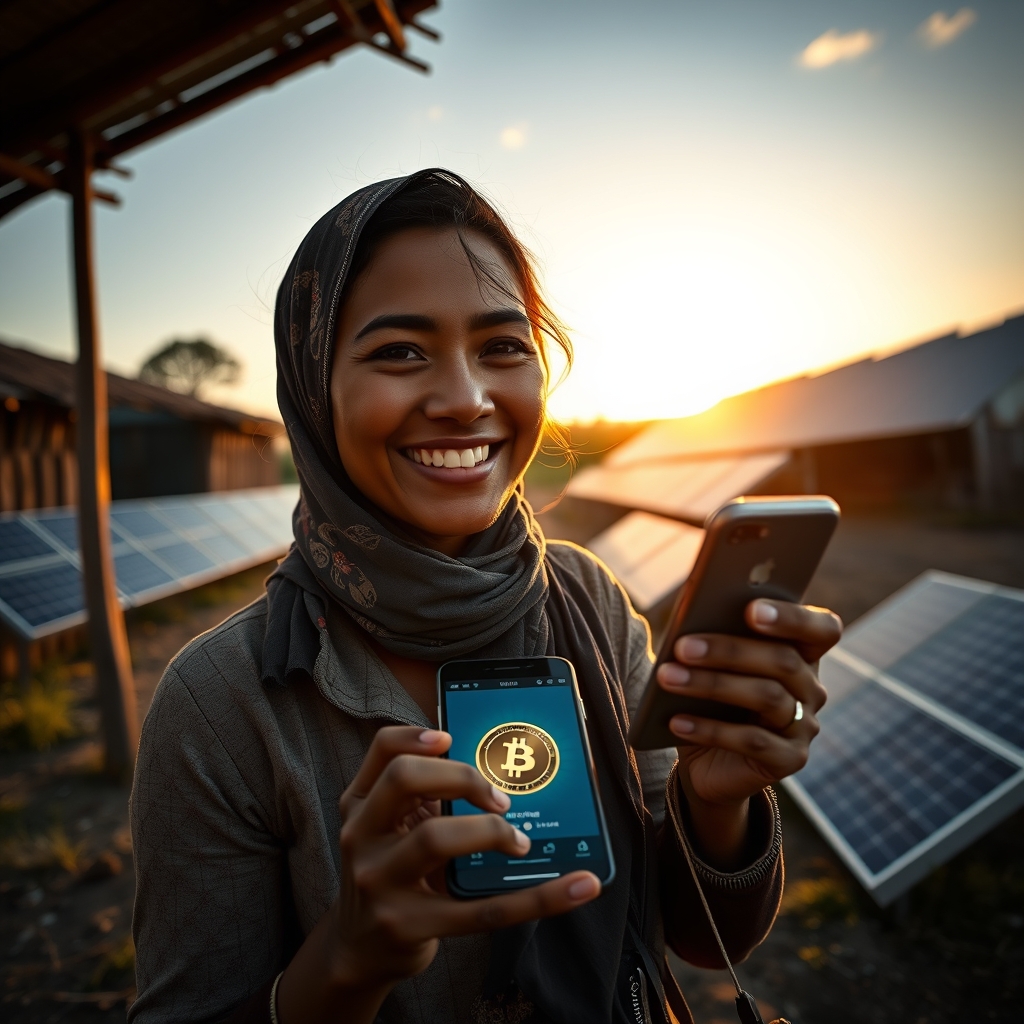
A coalition of twelve developing countries, backed by the United Nations Development Programme and the African Development Bank, announced yesterday the launch of the Global Digital Inclusion Initiative (GDII), a blockchain‑based universal basic income (UBI) program that will distribute $100 a month in solar‑minted tokens to 15 million low‑income households.
The pilot, funded with $1.5 billion from multilateral donors and private‑sector partners, will operate in rural regions of Kenya, Ghana, Bangladesh, Nepal, Honduras and five other nations. Recipients will receive the tokens via a mobile app that runs on low‑cost smartphones, with each token backed by renewable energy generated by community solar farms.
“We are leveraging the transparency of blockchain and the affordability of solar power to create a scalable social safety net,” said Dr. Lina Okafor, senior economist at the African Development Bank. “Initial simulations suggest that a token‑based UBI can reduce transaction costs by up to 30 percent compared with traditional cash transfers.”
Early field tests in Kenya’s Turkana County showed a 12 percent rise in household spending on nutritious food and a 9 percent boost in enrollment in local micro‑enterprise programs within the first three months of token distribution.
However, the initiative faces hurdles. In Bangladesh, only 68 percent of target households have reliable internet access, and regulatory frameworks for digital currencies remain fragmented. “Policy alignment is the biggest barrier we face,” noted Carlos Mendes, CEO of SolarChain, the firm supplying the blockchain infrastructure.
UNDP spokesperson Maria González emphasized that the pilot is designed to be adaptable. “If we can demonstrate measurable improvements in education, health and economic participation, the model could be replicated in other regions facing similar cash‑transfer inefficiencies,” she said.
Analysts predict that the GDII could reshape global development financing, especially as nations grapple with the volatility of traditional currencies. “A successful rollout would prove that technology can deliver inclusive growth without compromising sovereignty,” remarked James Whitaker, senior fellow at the Brookings Institution.